

Brief Summary
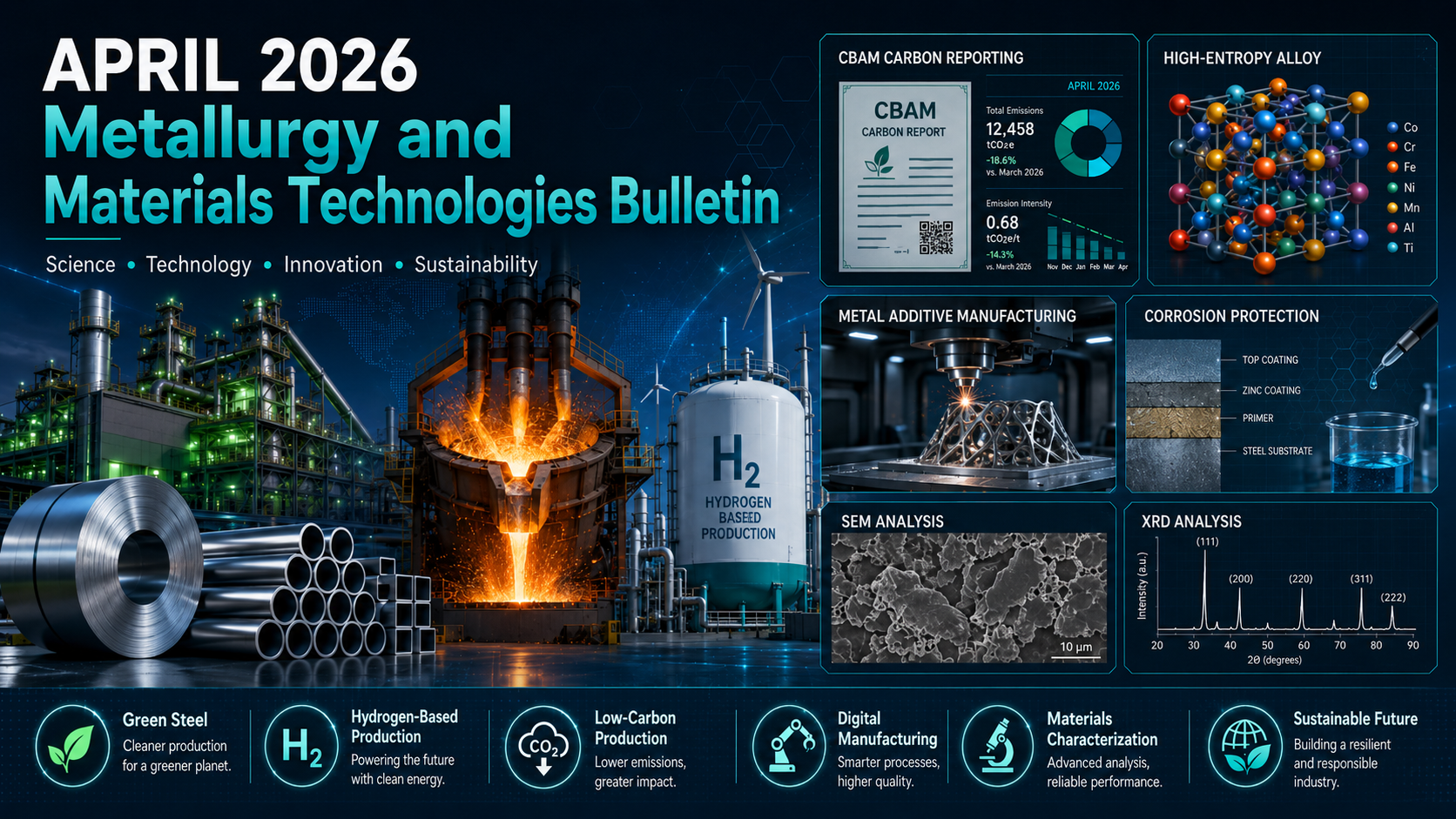
In April 2026, the metallurgy and materials engineering agenda focused on CBAM certificate pricing, the decline in global crude steel production, Türkiye’s positive steel production performance, additive manufacturing, high-entropy alloys, corrosion-protective coatings, and AI-assisted materials development. The European Commission announced the publication of the first CBAM certificate price for Q1 2026, indicating that carbon costs are becoming more concrete for iron-steel and aluminium exporters.
This Month's Highlights
3.1 The first CBAM certificate price was published
The European Commission announced the publication of the first CBAM certificate price for Q1 2026. It also published a new guide explaining how non-EU operators can delegate access rights to employees in the CBAM Registry. This shows that exporters must not only collect emissions data but also institutionalize authorization, verification, and reporting processes.
3.2 Global crude steel production continued to decline
According to March 2026 data published by the World Steel Association in April, crude steel production from 69 reporting countries reached 159.9 million tonnes, a 4.2% decrease compared with March 2025. China’s production fell by 6.3%, while India, the United States, Türkiye, and Germany recorded increases.
3.3 Türkiye showed positive steel production growth
According to worldsteel, Türkiye produced 3.3 million tonnes of crude steel in March 2026, increasing by 6.4% year-on-year. The Turkish Steel Producers Association also highlighted Türkiye’s 6.4% crude steel production growth in its April 2026 sectoral evaluation.
3.4 Nature Portfolio highlighted corrosion and additive manufacturing
In April 2026, Nature Portfolio publications, particularly from npj Materials Degradation, Communications Materials, and Scientific Reports, highlighted corrosion-protective coating formulations suggested by machine learning, electron beam surface melting of titanium alloys, fatigue resistance in additively manufactured high-entropy alloys, and laser metal deposition of high-entropy alloys.
New Developments in Metallurgy and Material Technologies
In April 2026, two key trends stood out in advanced materials: AI-assisted materials development and high-performance alloys designed for additive manufacturing. A study published in npj Materials Degradation on 1 April 2026 proposed new corrosion-protective coating formulations using machine learning based on historical test data. This approach may enable faster coating design and more targeted corrosion-resistance optimization compared with traditional trial-and-error methods.
On the additive manufacturing side, a Communications Materials study published on 28 April 2026 reported that dual precipitates can enhance fatigue resistance in an additively manufactured high-entropy alloy. A Scientific Reports study published on 29 April 2026 optimized laser metal deposition process parameters for AlCoCrFeNi₂.₁ high-entropy alloy. Together, these studies show that high-entropy alloys are moving closer to industrial relevance in terms of manufacturability and service performance.
Production and Industry Agenda
In April 2026, three industrial issues stood out for steel producers: production volume, carbon cost, and quality-efficiency optimization. The March data published by worldsteel in April showed that Türkiye achieved positive production growth despite the global decline in crude steel output. This creates opportunities for the Turkish steel sector; however, CBAM, energy costs, and carbon-intensity pressure in export markets require stronger data infrastructure, emissions reporting systems, and process-efficiency investments.
Sustainability and Green Metallurgy
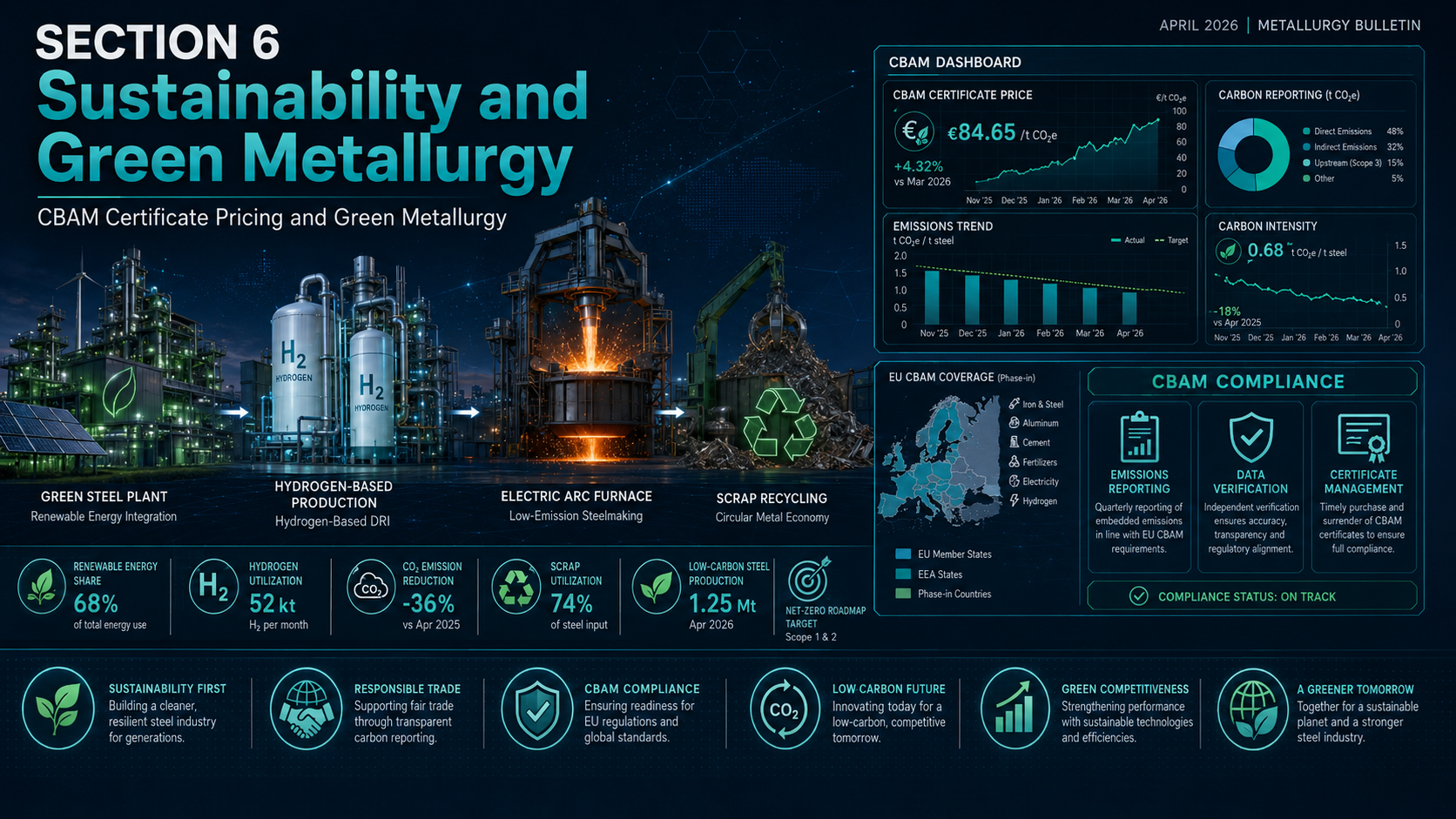
In April 2026, the sustainability and green metallurgy agenda centred on CBAM implementation, carbon certificate pricing, low-carbon steel production, scrap use, electric arc furnaces, and green hydrogen. The European Commission’s publication of the first CBAM certificate price for Q1 2026 shows that emissions data is now directly linked to cost and market access for carbon-intensive exporters.
Therefore, as of April 2026, green metallurgy is not only an environmental target; it is also a matter of trade, finance, supply chain management, and competitiveness. Low-carbon electricity, scrap quality, EAF efficiency, hydrogen-based reduction, and product-level carbon footprint calculation are becoming increasingly strategic for producers.
Academic Research and Publication Agenda
he following Nature Portfolio studies are particularly relevant to the April 2026 academic research agenda:
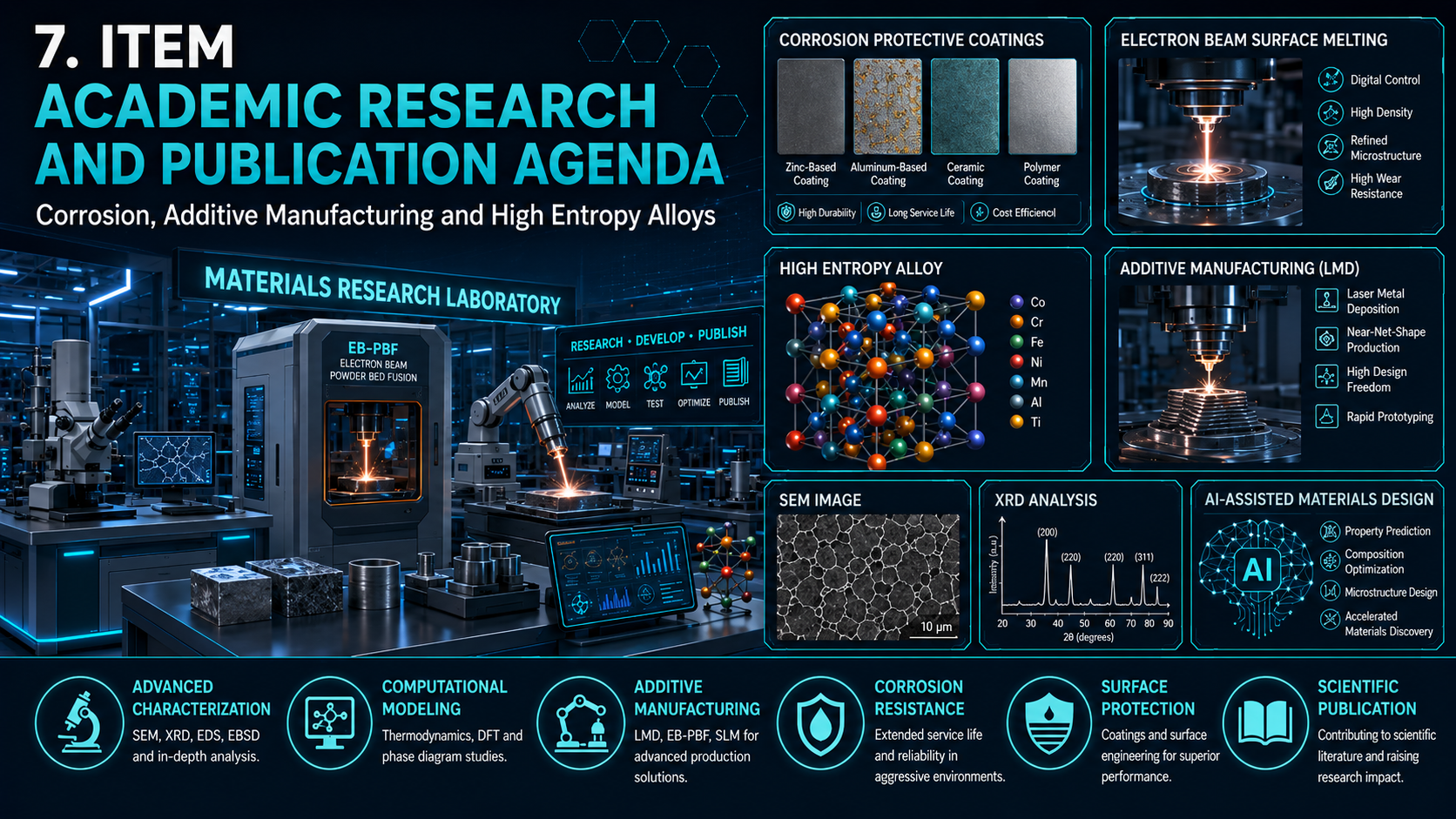
Machine-learning-based corrosion-protective coating design: A study in npj Materials Degradation showed that new coating formulations can be suggested using historical test data. This is important for maintenance cost reduction, longer service life, and sustainable materials use.
Electron beam surface melting of titanium alloys: A study published on 13 April 2026 investigated the effect of electron beam surface melting on the microstructure and corrosion behaviour of Ti-4Al-4Zr-2Sn-1.5Mo-Nb-V alloy. The study is important for improving long-term performance of titanium alloys in marine environments.
Corrosion products in NiCu low-alloy steel: A study published on 11 April 2026 evaluated how anodic polarization products of NiCu low-alloy steel affect corrosion behaviour in compacted bentonite. This is technically important for steel materials used in high-level radioactive waste containment systems.
Additive manufacturing of high-entropy alloys: Two studies published at the end of April showed progress in both process optimization and fatigue resistance of high-entropy alloys. This research line is worth following for aerospace, energy, defence, and high-temperature applications.
Source
April 2026 References
1 - European Commission – CBAM page, Q1 2026 certificate price and April 2026 updates. Go to Source
2 - World Steel Association – March 2026 crude steel production, published in April 2026. Go to Source
3 - Turkish Steel Producers Association – April 2026 sector evaluation. Go to Source
4 - npj Materials Degradation – Machine-learning-based corrosion-protective coating formulations. Go to Source
5 - npj Materials Degradation – Electron beam surface melting and corrosion behaviour of a titanium alloy. Go to Source
6 - npj Materials Degradation – Anodic polarization products and corrosion behaviour of NiCu low-alloy steel. Go to Source
7 - Communications Materials – Dual precipitates and fatigue resistance in an additively manufactured high-entropy alloy. Go to Source
8 - Scientific Reports – Laser metal deposition process optimization for AlCoCrFeNi₂.₁ high-entropy alloy. Go to Source