

Brief Summary
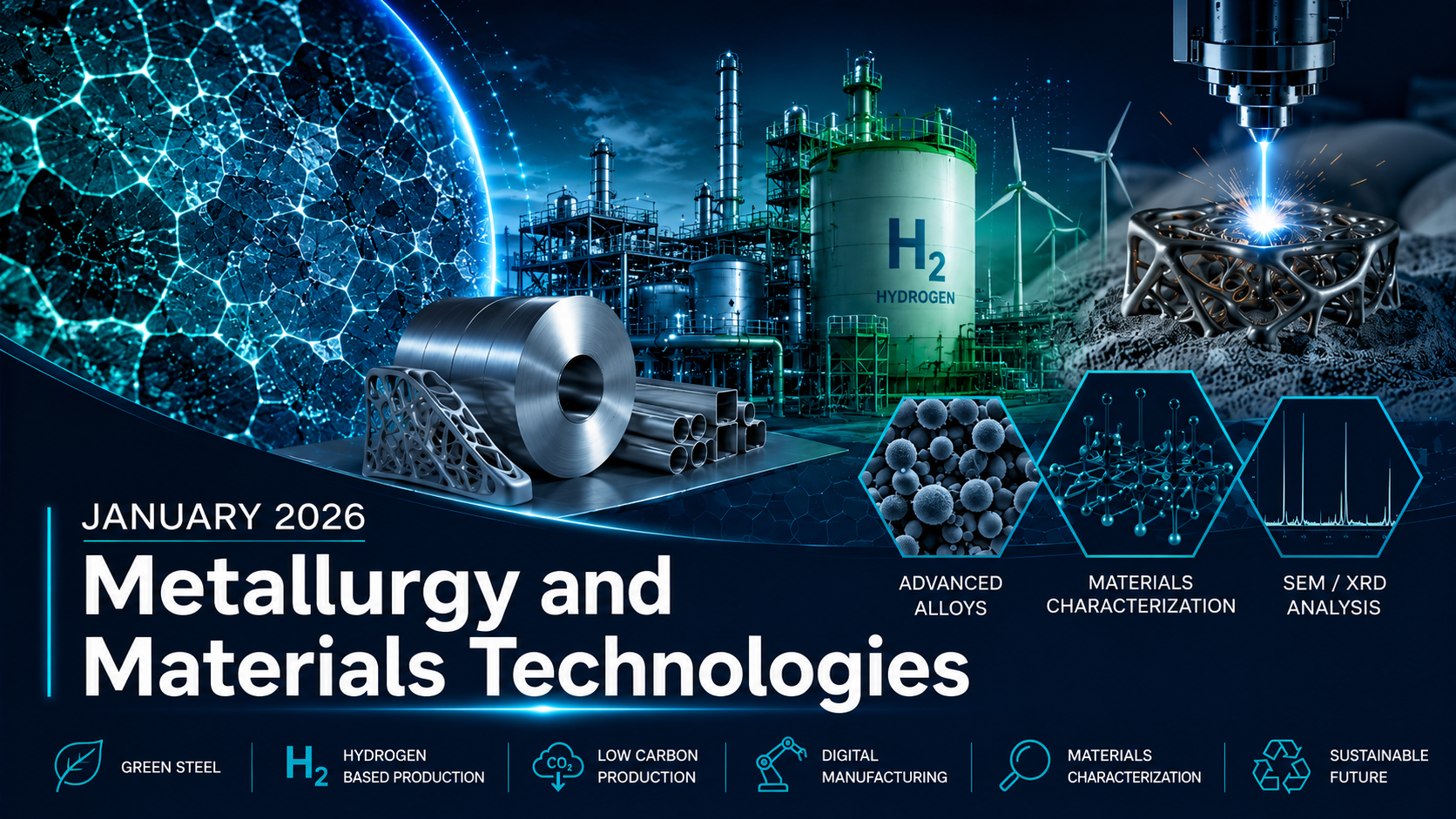
January 2026 was a period in which the topics carbon regulations, green steel, advanced production technologies and functional engineering materials came to the fore in terms of metallurgy and materials engineering. While the European Union's CBAM definitive regime came into force on January 1, 2026, Türkiye increased its crude steel production on an annual basis. In the same period, remarkable studies were published in academic fields such as additive manufacturing, corrosion resistance, biodegradable Mg alloys, solid state batteries and carbon diffusion in steel.
This Month's Highlights
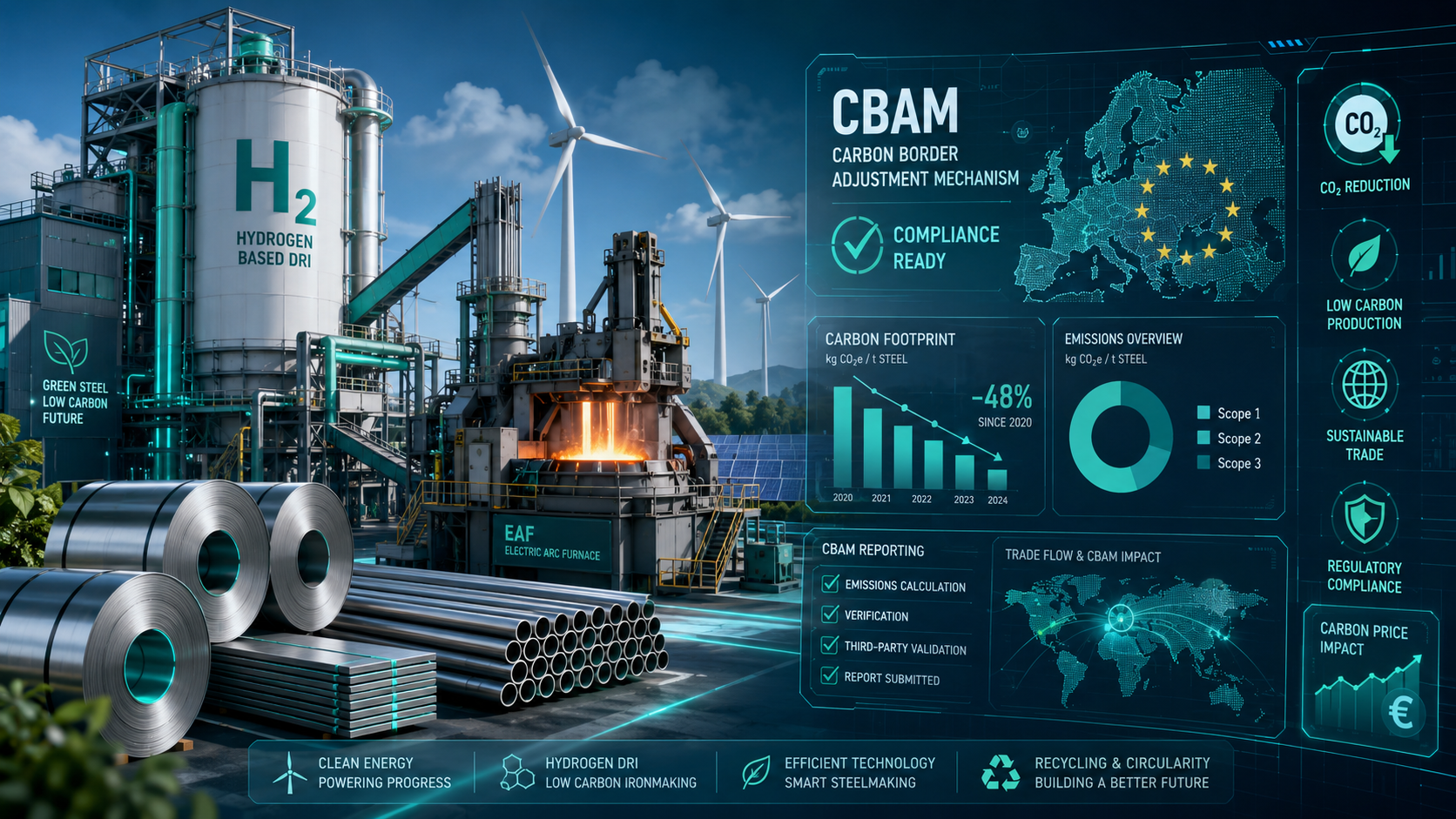
CBAM definitive period has begun. The European Commission announced that the Border Carbon Regulation Mechanism has entered the definitive period as of January 1, 2026. This development directly concerns carbon-intensive sectors such as iron and steel, aluminum, cement, fertilizer, hydrogen and electricity.
Turkey increased its crude steel production. According to TÇÜD data, Turkey's crude steel production in January 2026 increased by 5.8% compared to the same month of the previous year, reaching approximately 3.4 million tons. On the other hand, world crude steel production decreased by 6.5% in January 2026, reaching 147.3 million tons.
2026 is seen as a critical year in the green steel transformation. According to the IEEFA evaluation, 2026 may be a year in which steel production technologies moving away from fossil fuels can regain momentum; Hydrogen-based DRI and EAF investments are at the center of this transformation.
Process monitoring and artificial intelligence came to the fore in additive manufacturing. In the January 25, 2026 issue of Additive Manufacturing magazine, porosity monitoring with acoustic emission in metallic laser powder bed fusion, thermal modeling with physics-based neural networks, and molten salt corrosion in WAAM and NiMoCr coated steels were discussed. studies were included.
New Developments in Metallurgy and Material Technologies
Biodegradable magnesium alloys: In a study published in Scientific Reports, the powder metallurgy parameters of Mg-30Zn-5Ca-3Mn alloys were examined. The study shows that grinding and sintering conditions have a significant impact on microstructure, tensile strength, microhardness and biocorrosion behavior. This issue is important for temporary orthopedic implants and biocompatible engineering materials.
Silver-based protective layer for solid state batteries: Stanford researchers reported that a very thin silver layer on the LLZO solid electrolyte surface can increase crack resistance and is promising in terms of the safety and cycle life of lithium metal batteries. The study is currently at laboratory scale and requires long-cycle validation in commercial cells.
Micro/nanoscale superelastic materials: The review published in NPG Asia Materials discussed the potential of micro/nanostructuring to increase recoverable elastic deformation in metals, ceramics, high-entropy alloys, amorphous alloys and shape memory alloys.
Carbon diffusion and magnetic field effect in steel: In a study based at the University of Illinois, it was explained computationally how external magnetic fields slow down carbon diffusion in BCC iron. This finding is important for understanding heat treatment, microstructure control and diffusion-based processes in steel.

Production and Industry Agenda
Turkish steel industry: Although the production increase in January 2026 seems positive, TÇÜD data points to a decrease in exports in terms of quantity and value. The decline in exports to the EU market shows that CBAM and carbon costs need to be monitored more closely for sector competitiveness.
Global steel production: According to Worldsteel data, while China's crude steel production decreased in January 2026, it increased in countries such as India, the USA, Turkey, Germany and Iran. This chart shows that the weight of global steel production continues to rebalance regionally.
Additive manufacturing and advanced process control: In the January 2026 publications, porosity monitoring, thermal field modeling and corrosion behavior in metal additive manufacturing were discussed together. This trend applies to production technologies not only in parts production; It shows that it has developed with a focus on instant quality control, digital twin and process reliability.
Casting and composite production trend: Sustainable aluminum matrix composite studies published in January 2026 show that methods such as the utilization of industrial waste as a reinforcement phase and stirred casting are still current research areas for lightweight, high-strength materials.
Sustainability and Green Metallurgy
The main topic of the green metallurgy agenda in January 2026 was CBAM and low-carbon production. The EU's transition to a definitive CBAM era is not only an environmental issue for manufacturers; It has also become a matter of exports, carbon footprint verification, product-based emissions reporting and process modernization.
On the green steel side, hydrogen-based direct reduction, electric arc furnaces, increasing the use of scrap and low-carbon raw material strategies come to the fore. IEEFA's January 2026 assessment states that hydrogen-based DRI projects and regulatory pressure from CBAM in 2026 could accelerate the transformation.
In the field of corrosion, more resistant atmospheric corrosion steels, passive film behavior, microbial corrosion and environmentally friendly inhibitor approaches are increasing their visibility in the academic literature. In January 2026, studies on weather-resistant steels, microbial corrosion and green/nano-based corrosion control strategies were published within the scope of npj Materials Degradation.
Academic Research and Publication Agenda
Three main trends came to the fore in January 2026 academic publications:
1. Process-microstructure-performance relationship in material design: Powder metallurgy parameters, biocorrosion and mechanical strength in Mg alloys were examined together. This approach increases the importance of process optimization in implant and biomaterial development studies.
2. Intelligent monitoring and modeling in additive manufacturing: Laser powder bed fusion, physics-based neural networks and WAAM coating studies show that artificial intelligence-supported quality control is gaining more importance in production.
3. Material development focused on corrosion and service life:The study on Q450AWR5 and Q450NQR1 atmospheric corrosion steels reveals that evaluating real service data together with laboratory accelerated corrosion tests is valuable in terms of engineering design.
Source
January 2026 References
1 - European Commission – CBAM information page. Go to Source
2 - European Commission – CBAM entered into force on 1 January 2026. Go to Source
3 - Turkish Steel Producers Association – January 2026 press bulletin. Go to Source
4 - World Steel Association – January 2026 crude steel production. Go to Source
5 - IEEFA – Why 2026 could see momentum return to steel technology transition. Go to Source
6 - ScienceDirect – Additive Manufacturing, Volume 116, 25 January 2026. Go to Source
7 - Scientific Reports / Nature – Powder metallurgy and biocorrosion of Mg alloys. Go to Source
8 - Stanford Report – Solid-state lithium metal battery protective layer study. Go to Source
9 - University of Illinois / Physical Review Letters – External magnetic field suppression of carbon diffusion in iron. Go to Source
10 - NPG Asia Materials – Superelasticity in micro/nanostructured materials. Go to Source